Early-Stage SaaS Product Design
Novu
Building a benefits platform from concept to launch.Redesigning a startup concept into a polished, developer-ready product. Designed intuitive flows for employees and admins, simplified onboarding, and delivered a lightweight design system that accelerated development.
Product Design
SaaS Web app
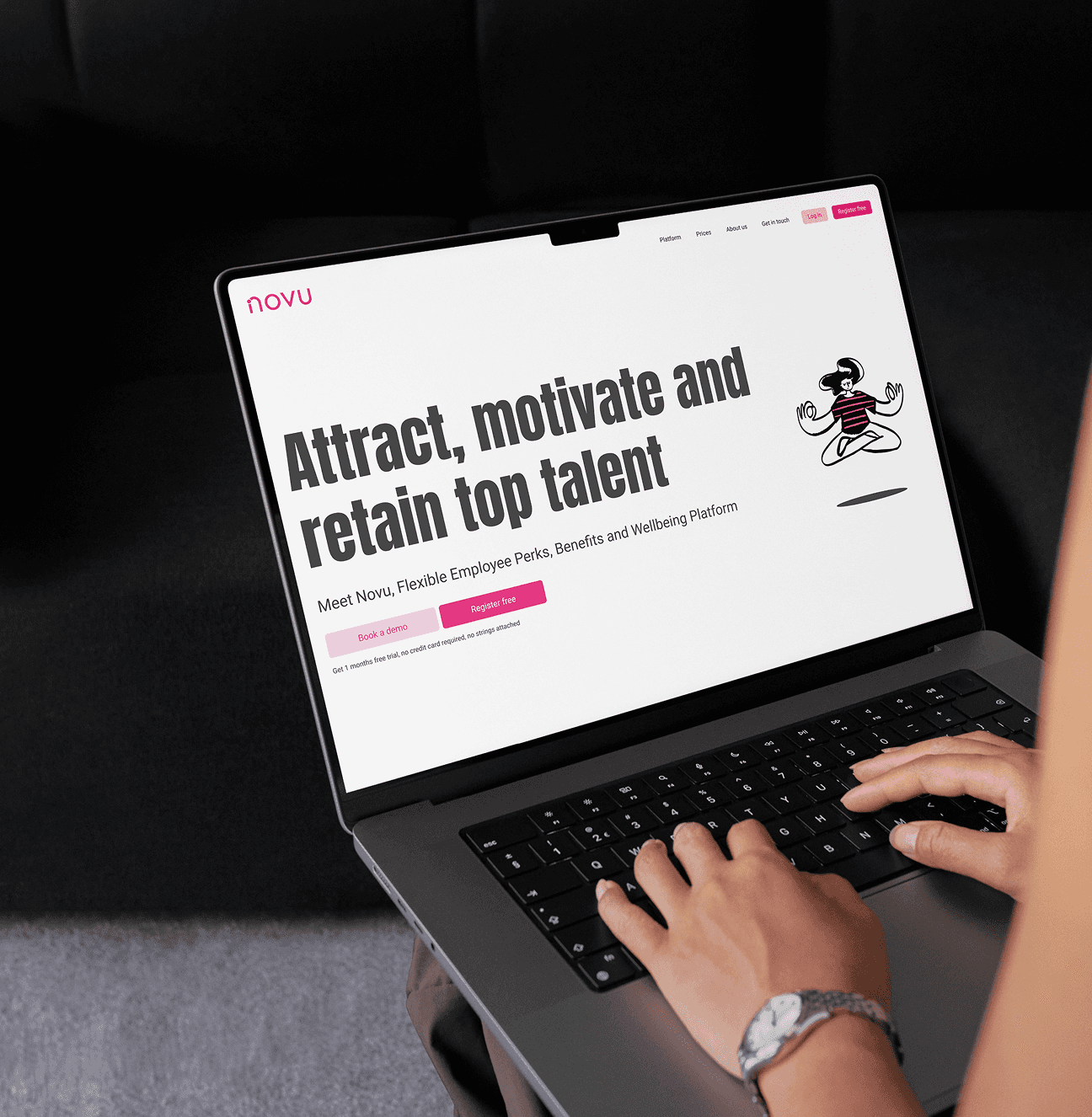
Project Overview
Client: Novu, an early-stage HR tech startup
Industry: SaaS, Fintech
Timeline: 12 weeks
My Role: Freelance Product Designer
I joined Novu as the first product designer, responsible for taking the founders’ initial vision and early mockups and turning them into a fully designed, developer-ready MVP. Over six months, I owned the end-to-end design process across employee and admin experiences, built a lightweight design system, and helped shape a product polished enough to support enterprise demos and secure early clients.
Context
Novu is an early-stage startup helping companies improve employee well-being by providing access to global perks and benefits. The product needed to serve two distinct audiences—employees and administrators—while remaining simple, trustworthy, and fast to understand during sales demos.
At the time, the founders had an initial concept, but the product needed structure, clarity, and execution speed to reach MVP and support early business traction.
My Role
As the first and sole product designer, I:
Owned end-to-end UX and UI design
Designed experiences for both employees and admins
Built and maintained a lightweight design system
Worked directly with founders (PM and engineering) and a frontend developer
My responsibility was not only to design screens, but to help shape what the MVP should be—and what could wait.
Phase 1 — Defining the MVP and reducing risk
Goal: Deliver a credible MVP that could win demos and early clients.
I facilitated early kickoff sessions with the founders to clarify product vision, define target users, and align on what success looked like for both the business and the user experience.
Together, we mapped key flows, identified onboarding risks, and prioritized features that could demonstrate value quickly. This led to a clear set of principles:
Lower the entry barrier for new users and prospects
Balance product quality with ease of implementation
Focus the MVP on moments that matter during demos
These decisions guided all subsequent design work.
Phase 2 — Solving onboarding and KYC friction
Goal: Help users see value before committing to a long setup process.
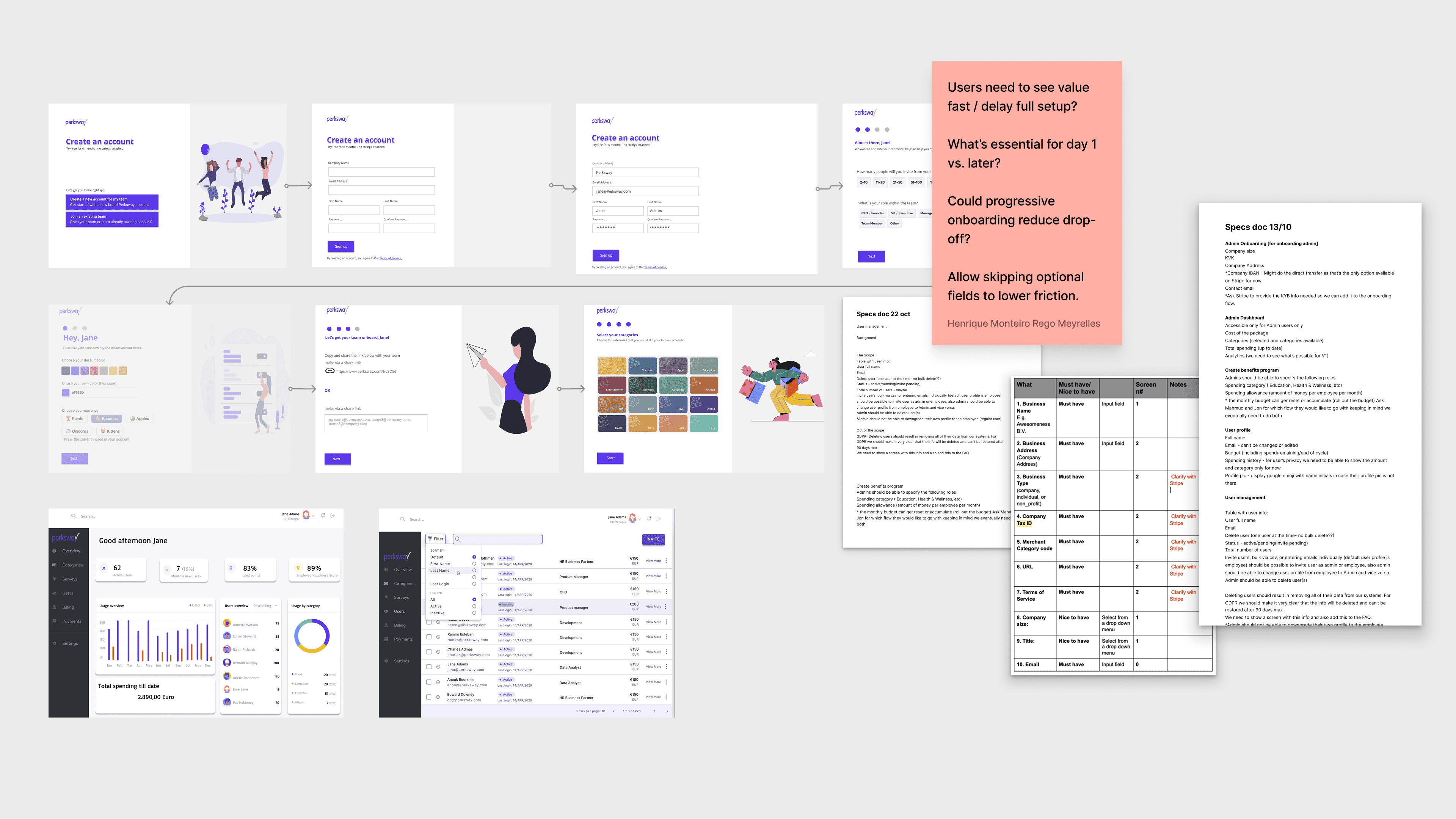
User research with HR managers and employees revealed a core issue: long onboarding and KYC flows created early drop-off, preventing users from experiencing the product’s value.
Key insights:
Admins were reluctant to provide full company and financial details upfront
Employees wanted quick access to benefits without navigating complex menus
I redesigned onboarding around progressive disclosure:
Split onboarding into essential first steps and optional follow-ups
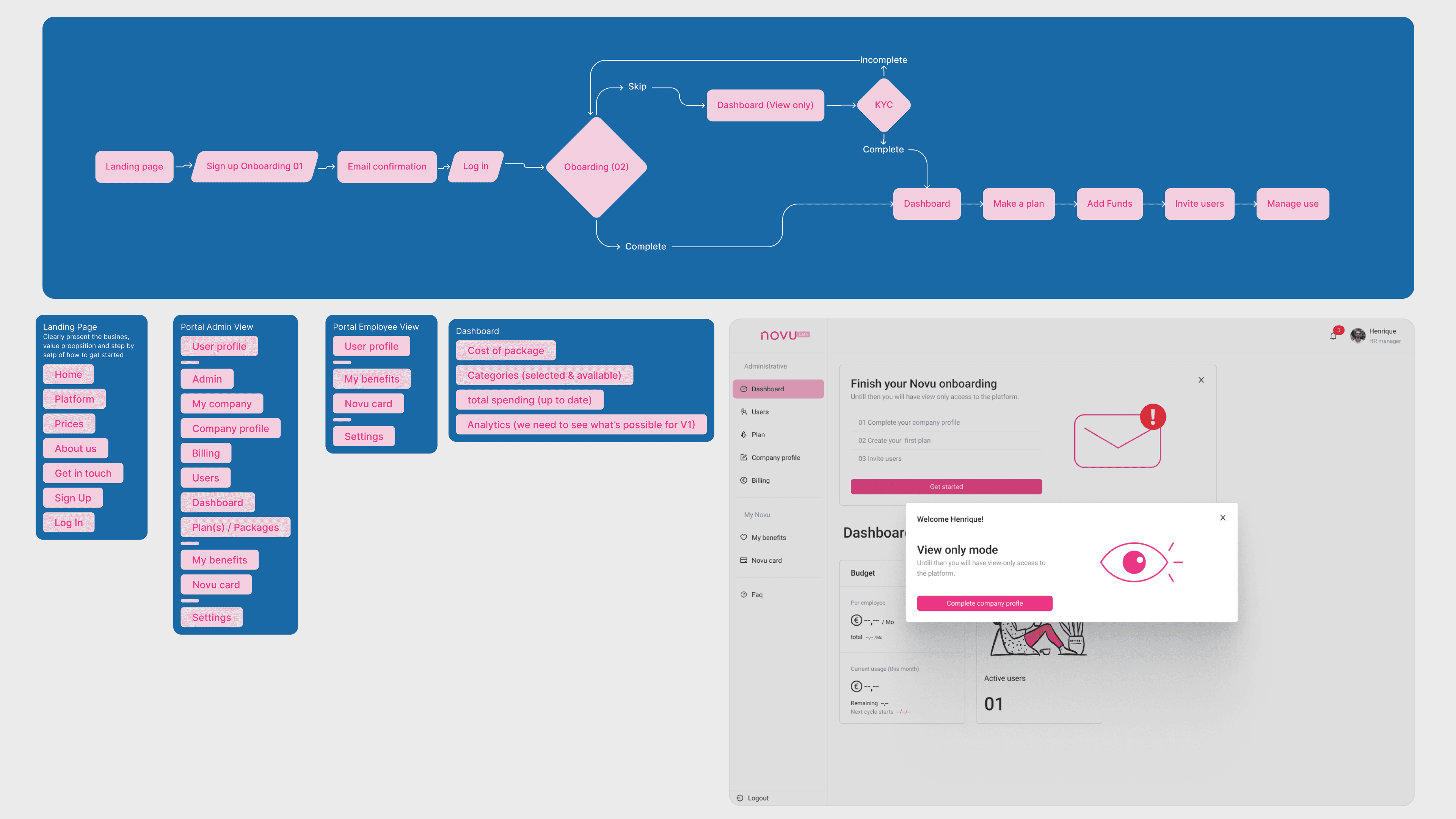
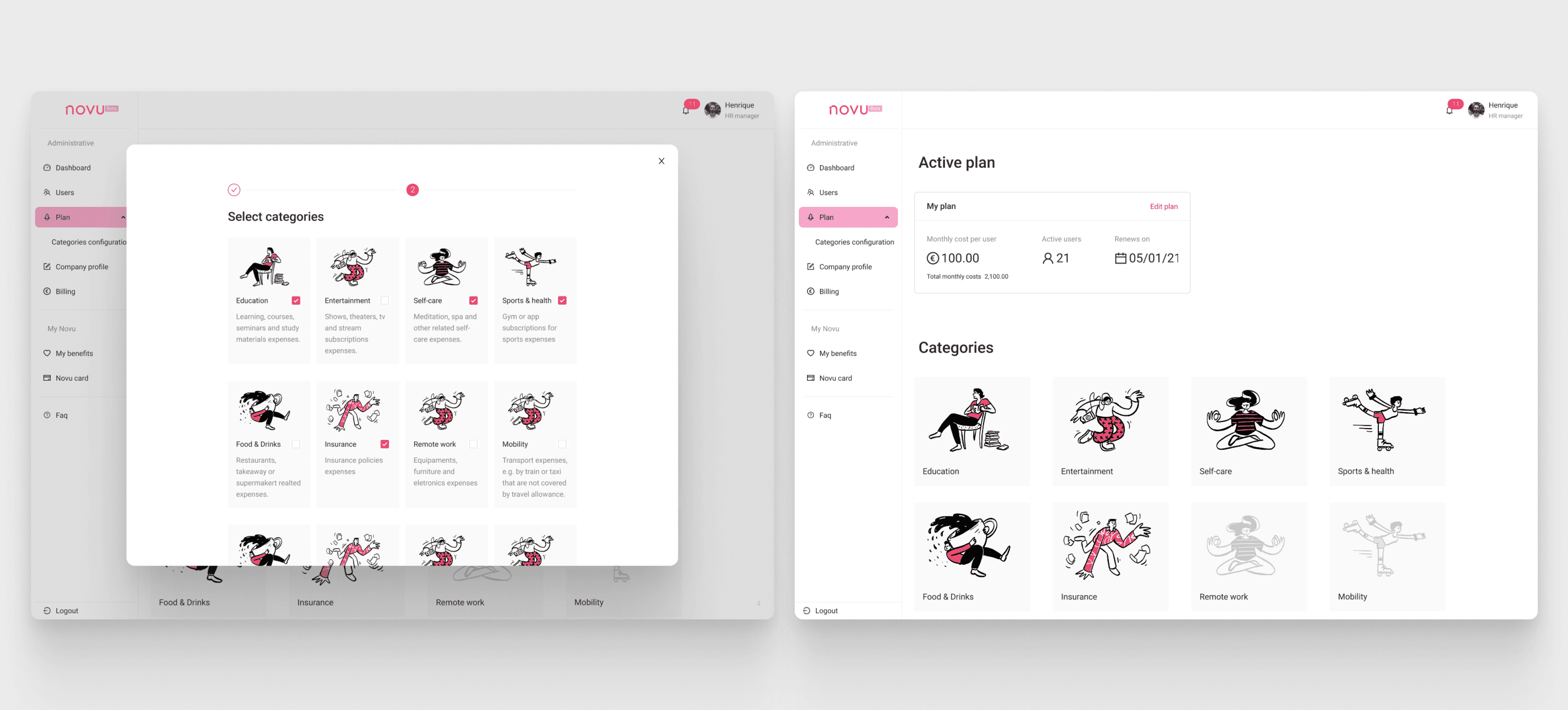
Introduced a view-only mode so users could explore the platform early
Used empty states and guided prompts to encourage completion later
Created role-specific sections so admins could also experience benefits firsthand
This approach balanced compliance needs with a smoother first experience.
Phase 3 — Designing core admin and employee experiences
Goal: Support two user types without increasing complexity.
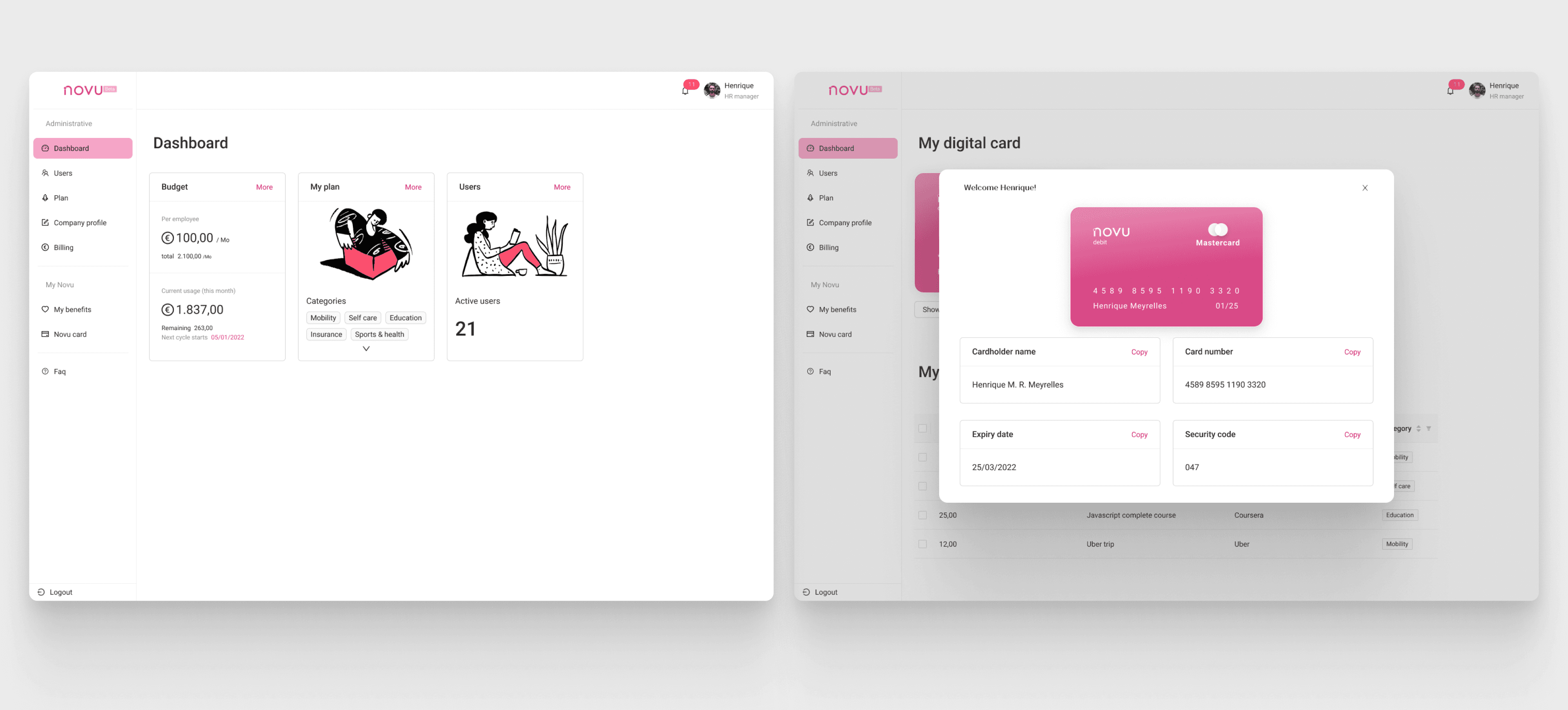
I designed clear, role-specific experiences for admins and employees, including:
Admin onboarding and company setup
User and role management
Benefits program creation and budgeting
Employee profiles, budgets, and spending history
Throughout, I focused on clear hierarchy, consistent patterns, and meaningful empty states to reduce cognitive load and improve usability during testing and demos.
Phase 4 — Prototyping, testing, and iteration
Goal: Validate usability and polish before development.
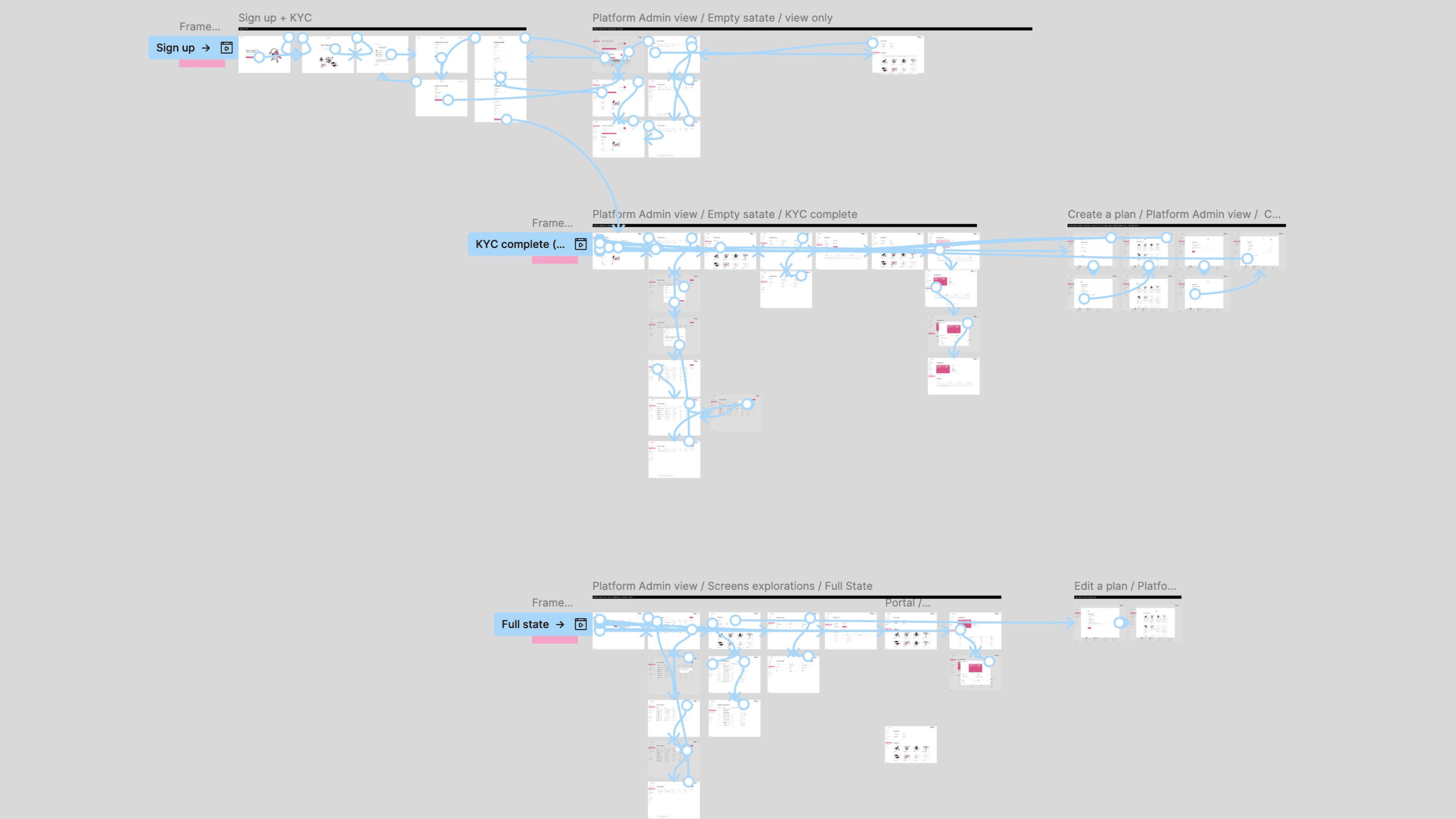
I built multiple interactive Figma prototypes used for usability testing and client demos. Testing consistently highlighted the same issues: unclear hierarchy and onboarding friction.
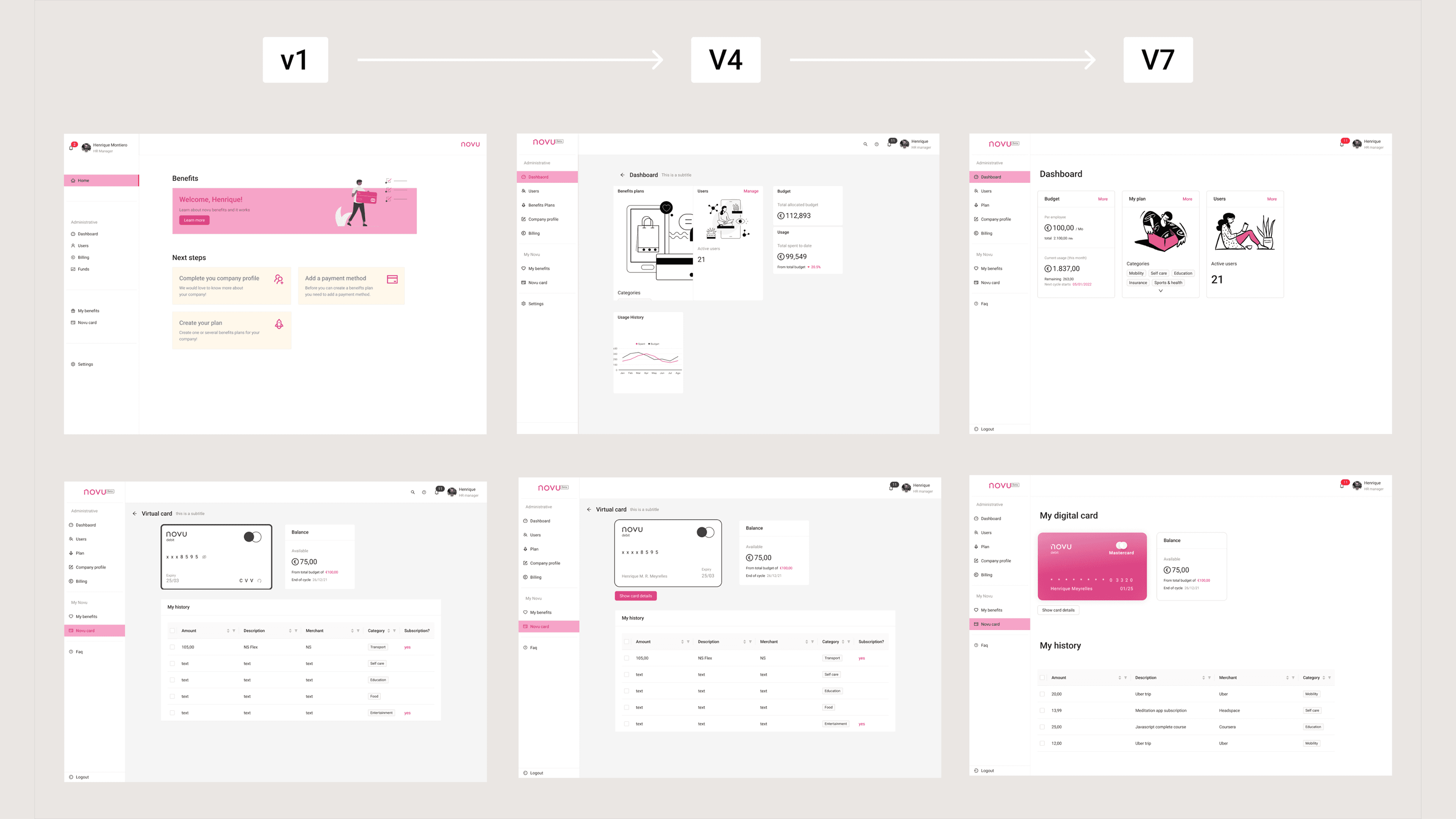
Based on feedback, I iterated by:
Shortening onboarding flows
Improving guidance and copy
Refining layouts and empty states
These iterations directly informed the final MVP specs delivered to engineering.
Design system and delivery
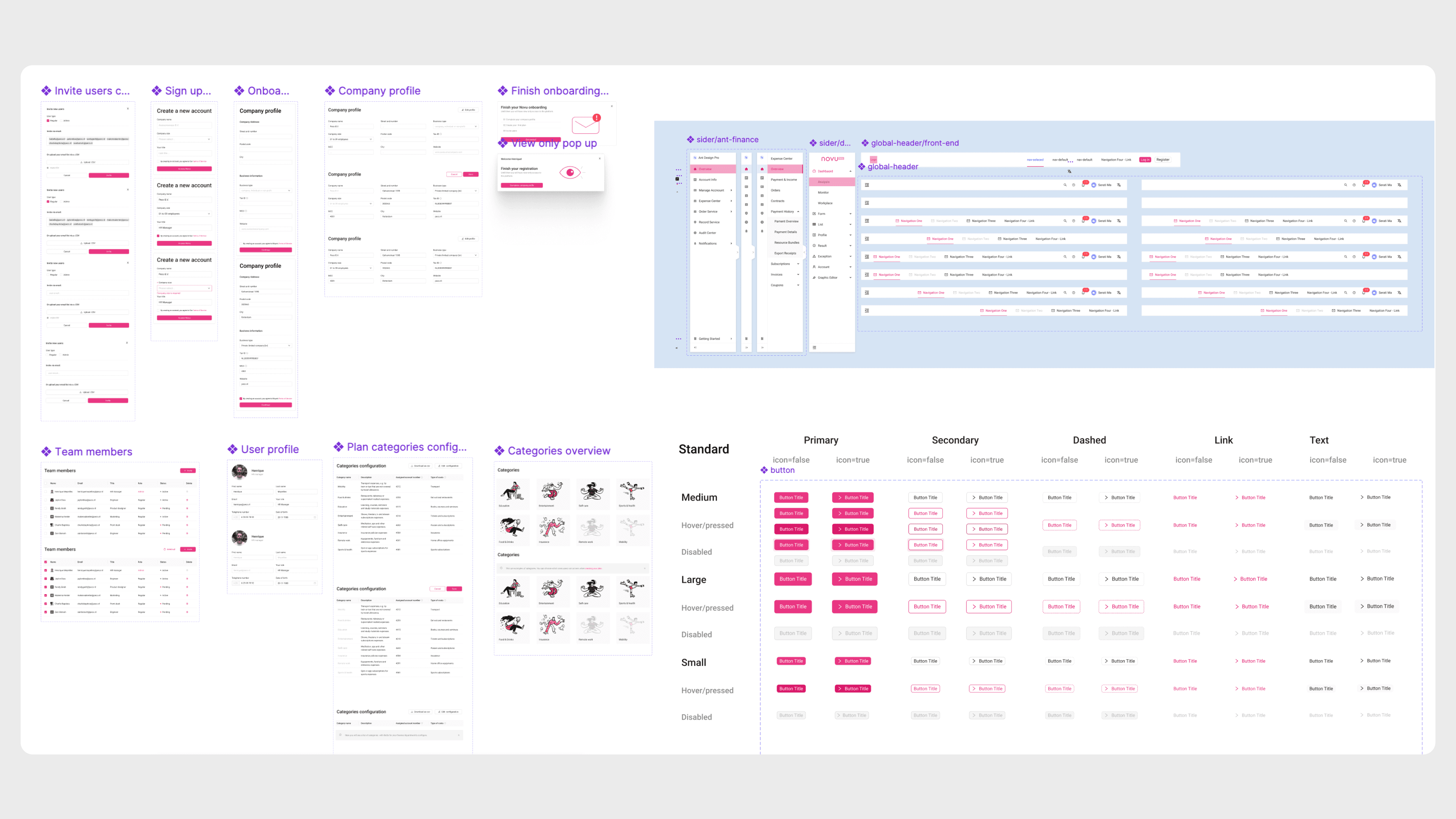
To support fast development with minimal rework, I created a lightweight design system:
Based on Ant Design, extended with Novu-specific components
Ensured visual consistency across screens
Provided clear specs and reusable components
This helped speed up implementation while keeping the product cohesive and easy to evolve.
Impact
60% faster onboarding completion in testing
+25% increase in demo interest due to a more polished product
+35% tester satisfaction after simplifying flows
~20% faster development enabled by reusable components and clear specs
The result was an MVP that was not only functional, but credible enough to support early enterprise conversations.
Collaboration highlights
This project was highly collaborative:
With founders, I helped translate vision into clear product decisions and trade-offs
With engineering, I aligned design scope to technical realities and delivery speed
With sales and demos, I optimized flows to showcase value early
Novu strengthened my ability to design from zero, make pragmatic MVP decisions, and balance user experience, business needs, and delivery constraints in an early-stage environment.